Multi-role employee onboarding platform, from research to validated prototype
Employee onboarding at many companies is broken. Managers don't have time to build proper plans. New hires get generic checklists with stale information. HR leaders can't see what's working and what isn't. The result: delayed productivity, poor engagement, and attrition. Research shows that disconnection during onboarding costs US companies up to $406 billion per year.
We talked to engineering managers, HR leaders, VPs, CTOs, and new hires across multiple companies. The same patterns showed up everywhere: no single source of truth, no accountability for onboarding quality, no way for new hires to build meaningful connections, and managers who assume HR handles everything.
I led product strategy, user research, and design. I led problem-framing workshops with my co-founders, then synthesized the output into the problem statements that shaped the product direction. I designed the user research plans, conducted three rounds of testing across different audiences (HR leaders, people managers, and new hires), synthesized findings, and workshopped designs with my co-founders.
I taught myself Figma and built the entire clickable prototype (including a complete design system and component library), all in one month.
The hardest design challenge was serving four distinct user roles (manager, new hire, HR leader, and onboarding contributor) with different needs and permissions, all within a single product. I solved this by designing role-based dashboards that surface exactly what each user needs.
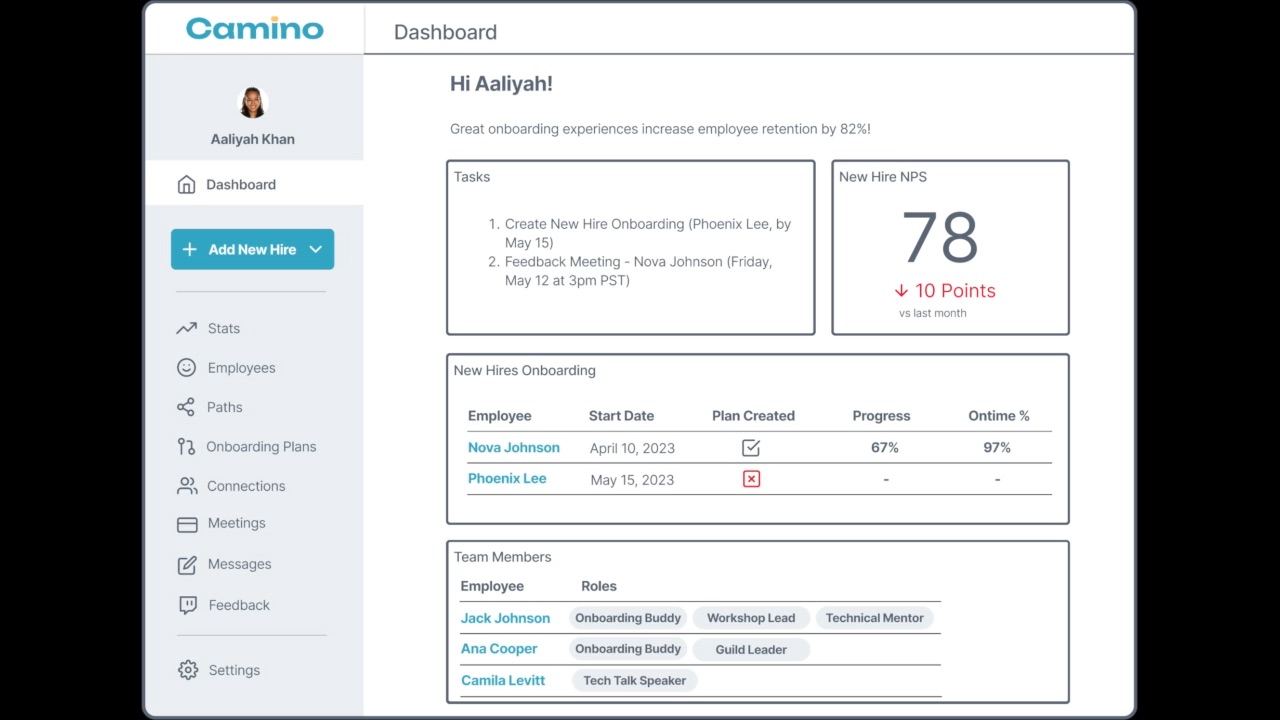
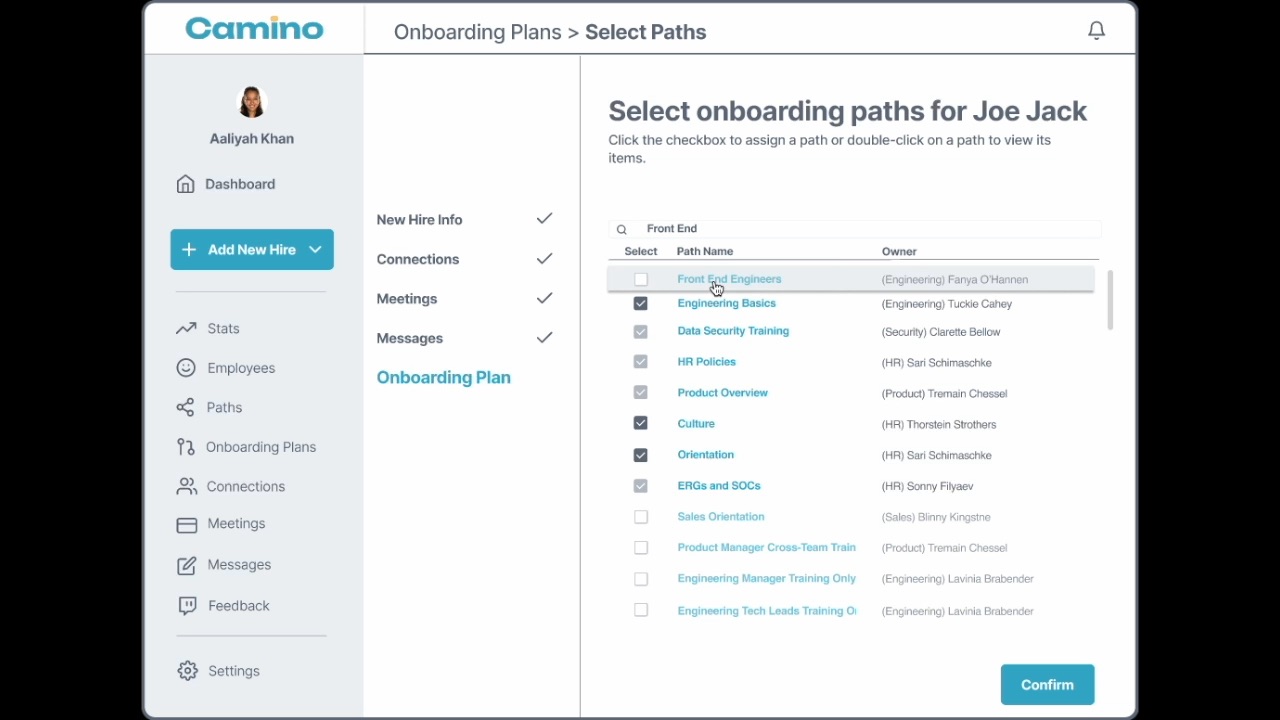
For managers: a task-driven dashboard with NPS tracking, new hire progress, and team member roles. The "Add New Hire" flow walks them through a structured five-step process (info, connections, meetings, messages, onboarding plan) so they can't skip the pieces that research showed matter most.
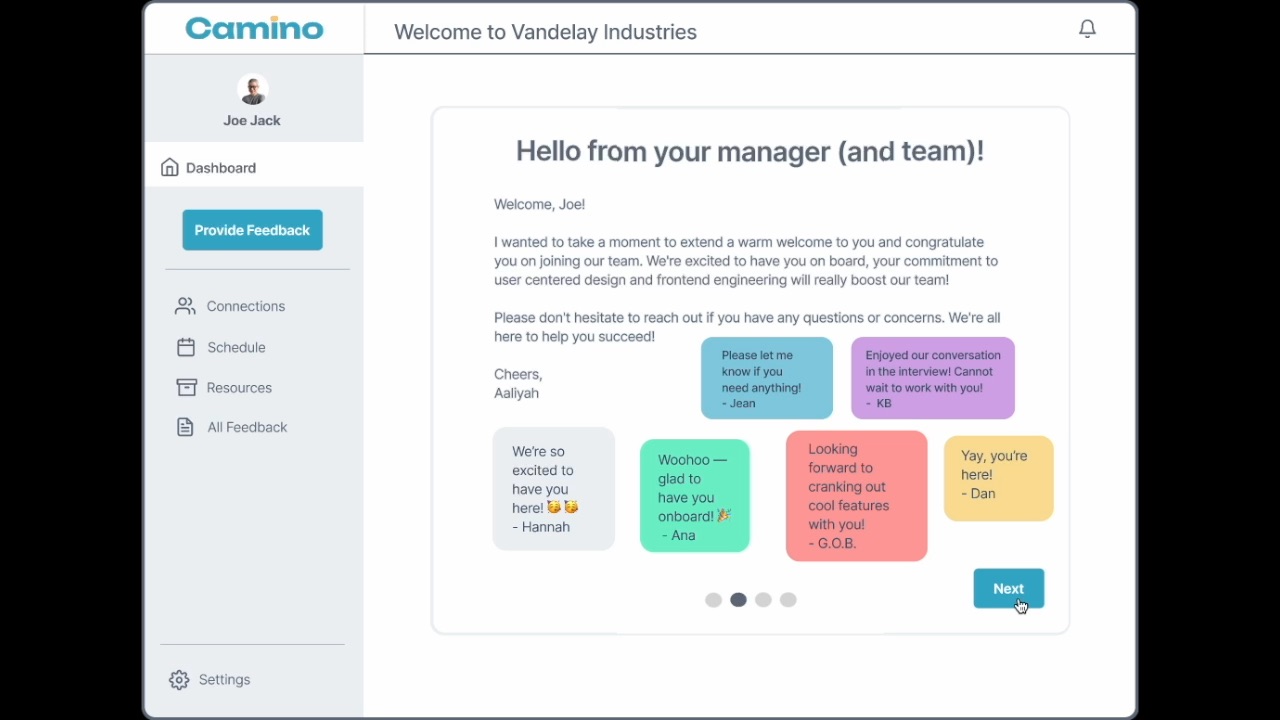
For new hires: a warm, guided welcome experience with a four-step onboarding carousel (welcome message, team introductions, key people, first-week calendar) that addresses the fear and isolation our research surfaced.
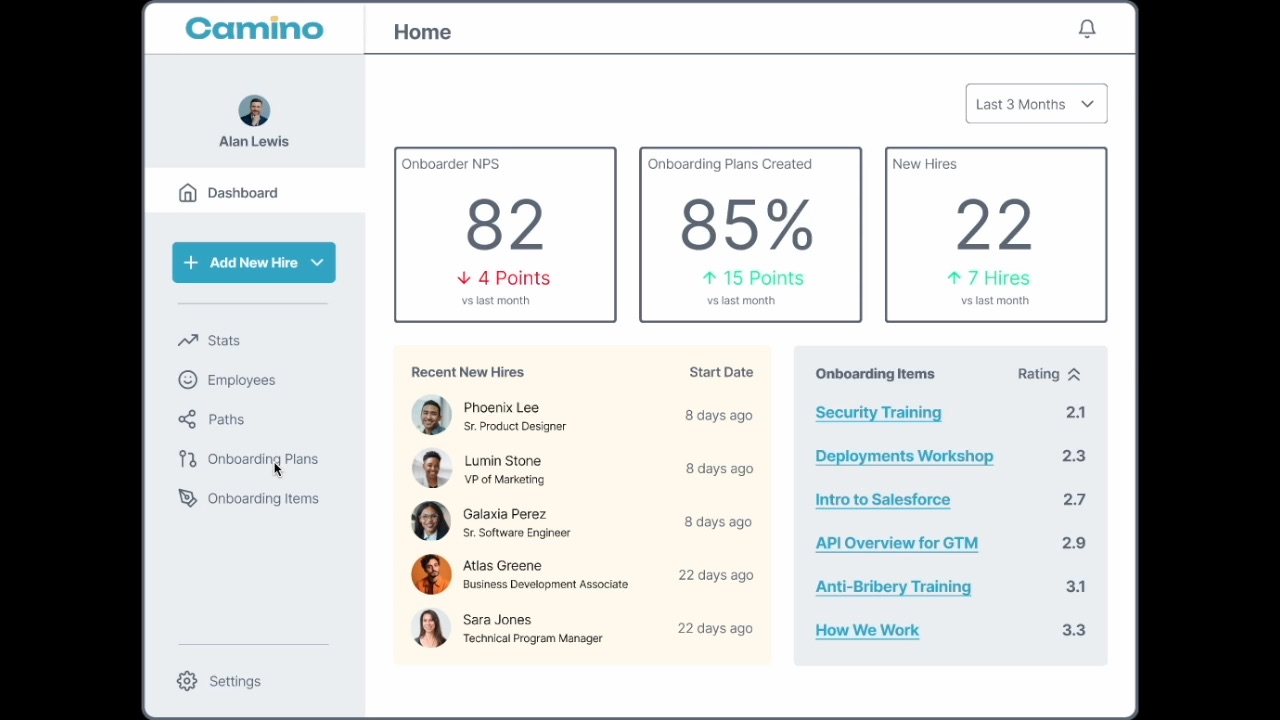
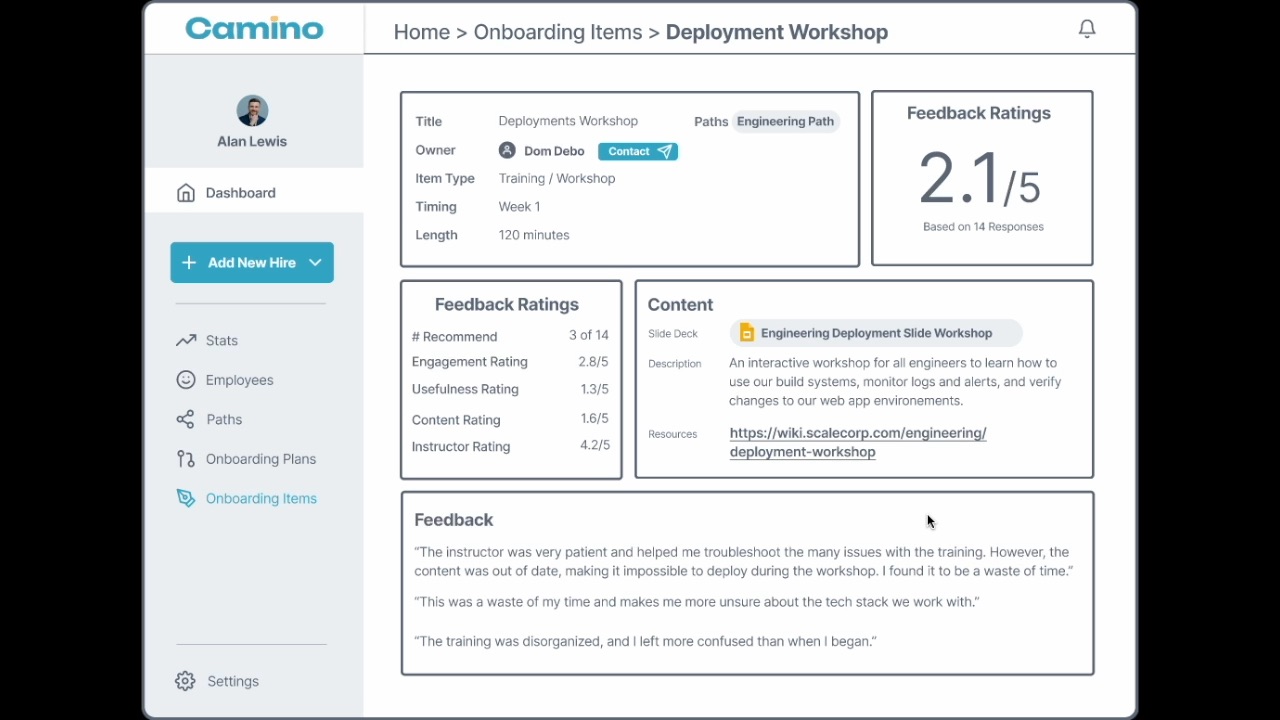
For HR leaders: an executive dashboard with NPS, plan creation rates, new hire volume, and the ability to drill down into individual onboarding items with detailed feedback ratings and verbatim responses.
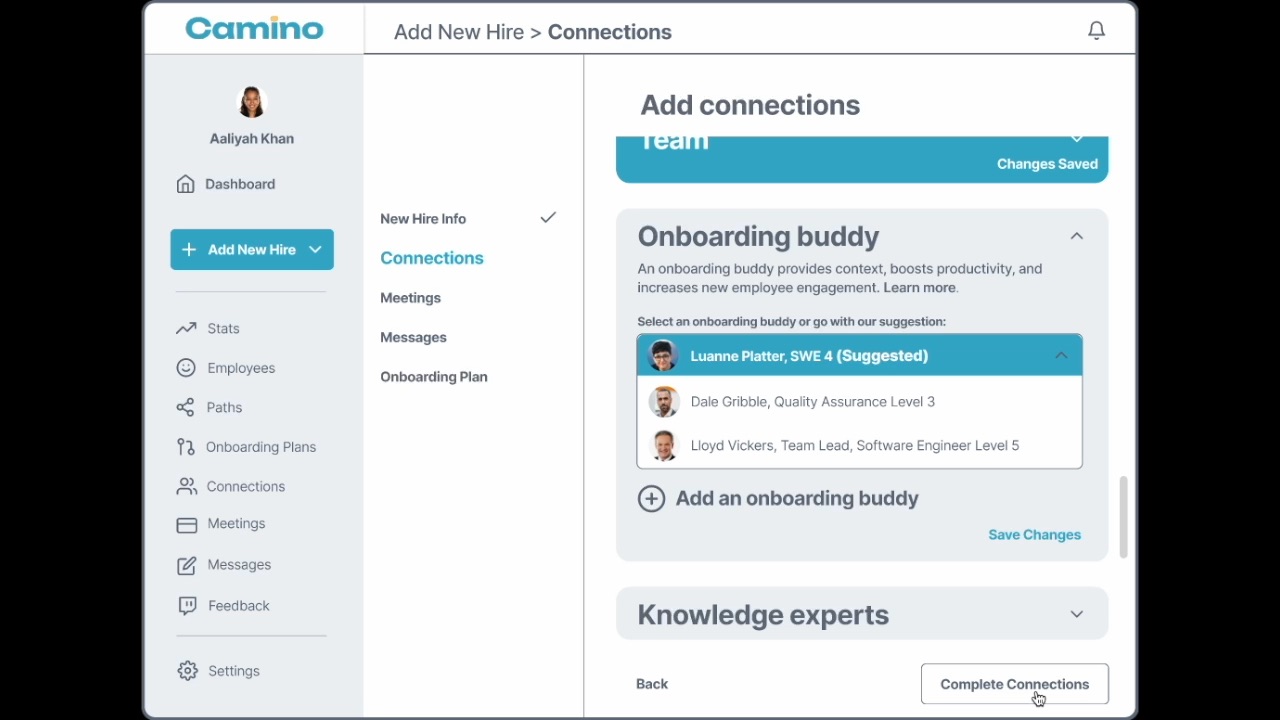
This was a direct response to research findings. New hires told us reaching out to strangers for help was scary: they often didn't do it. So the product automatically suggests an onboarding buddy, knowledge experts, and team members based on role, then schedules introductions. The new hire never has to cold-email a stranger.
Round 1 (March 2023): Generative discovery and idea validation with 11 participants including engineering managers, engineers, a CTO, a VP, a recruiter, and a Head of L&D.
Round 2 (May 2023): UI mockup testing with four people managers. Produced a findings report and iterated on designs.
Round 3 (June 2023): Prototype testing with three new hires and a separate session with HR leaders.
I delivered a validated, clickable Figma prototype in one month with no prior Figma experience. The prototype covers all four user roles with complete flows, a full design system, and a component library ready for engineering handoff. Three rounds of user research across 15+ participants confirmed the core product thesis: managers need structured onboarding tools, and new hires need proactive connection-building instead of stale checklists.
The research also surfaced a finding we didn't expect: onboarding quality varied wildly even within the same company. Managers with strong onboarding instincts built great plans; everyone else defaulted to a shared doc and hoped for the best. That gap validated the product's core bet. Handing managers a better onboarding template isn't the fix to the onboarding problem; the key is to build the full structure into the tool so every new hire gets a consistent experience regardless of who their manager is.