Habit-building app with personalized audio prompts, from research to deployed beta
Habit apps are everywhere, but for people who struggle with habits the most, existing apps don't always cut it. They track whether you completed a habit: pass or fail, but they don't help you actually start one.
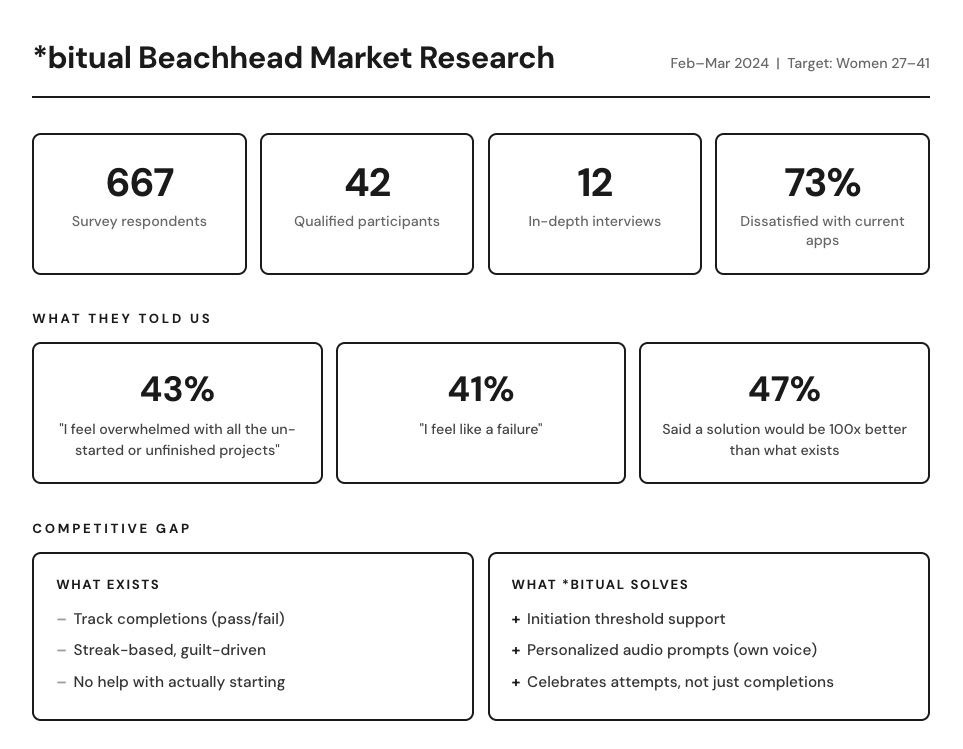
The most important barrier for people who struggle with habits is the initiation threshold. The gap between intending to do something and actually taking the first physical step. Existing apps (Habitica, Streaks, Habitify) reward streaks and completions, which works great if you're already doing the thing. They don't address the moment where you're sitting on the couch knowing you should go for a run but can't get yourself to stand up.
Product strategy, user research design and synthesis, PRD with success metrics, competitive analysis, beachhead market segmentation, GTM financial projections, and the full product build using Claude and Cursor AI. I shipped to TestFlight beta.
I ran a structured beachhead market research process: 12 one-on-one interviews and a survey that reached 667 respondents, filtered down to 42 qualified participants who matched the target profile (women 27–41 who struggle with habit initiation).
Key findings: participants wanted accountability but felt existing apps were too rigid and punishing. They responded more to encouragement and small wins than pass/fail tracking. What they wanted most was personalized support in the actual most difficult starting moment: support that resonated with their beliefs, goals, and desires. Additional research showed that what really matters in habit-building is not full habit completion but repeated attempts, no matter how small.
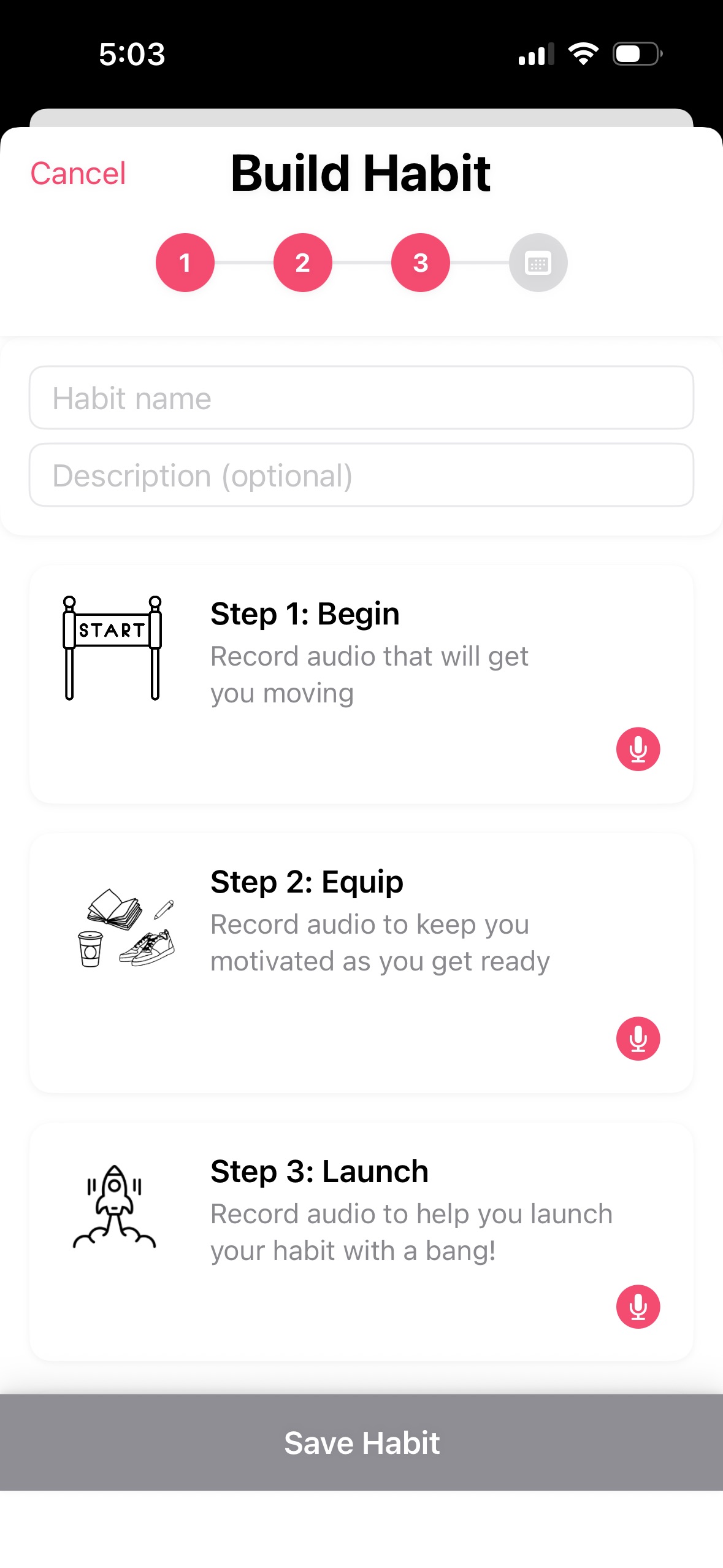
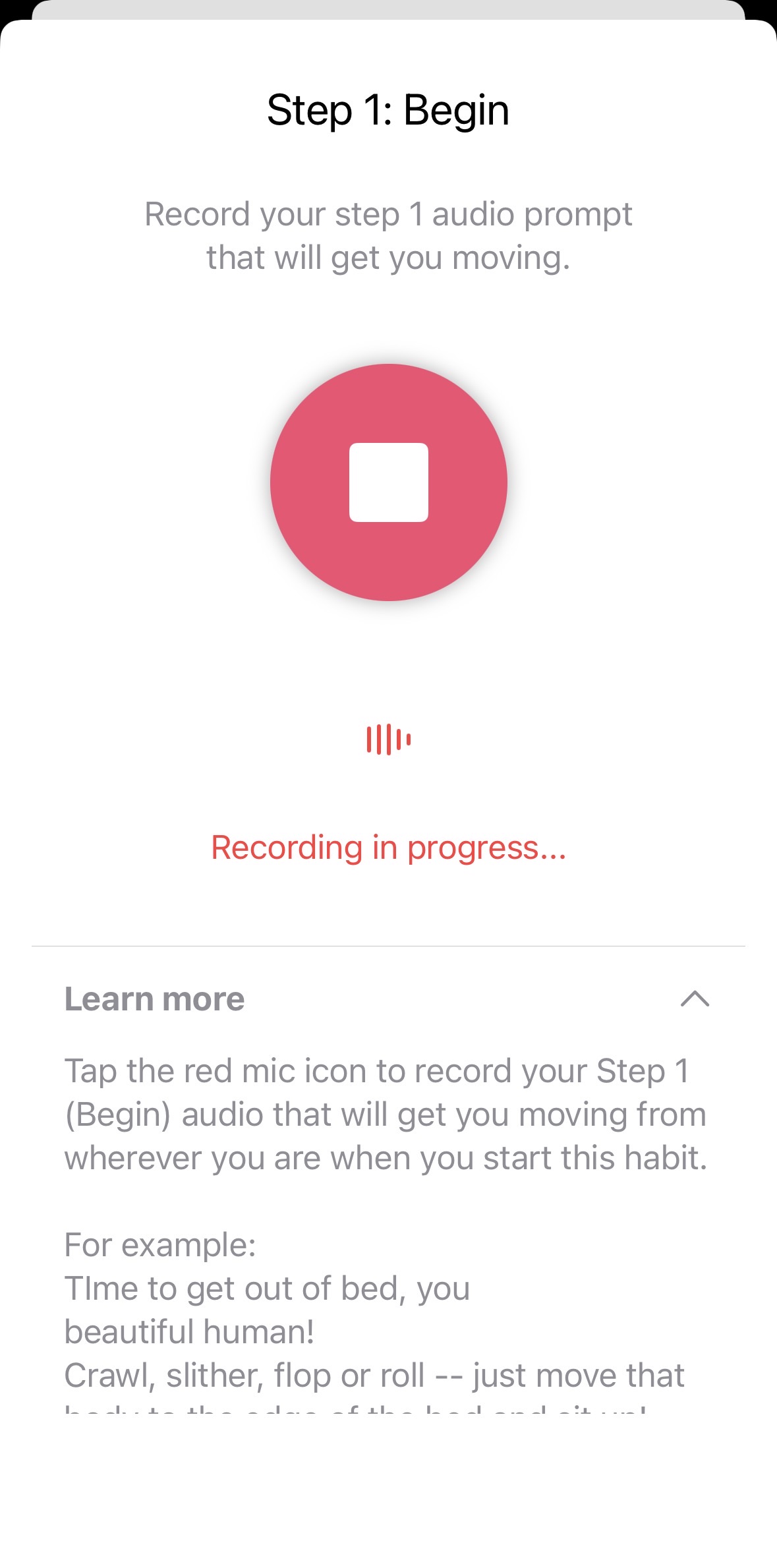
*bitual breaks each habit into three micro-steps: Begin (get moving), Equip (gather your tools), and Launch (do the thing). At each step, users record their own audio prompts in their own voice with their own words. The app plays these back at the scheduled habit time to walk them through the full sequence.
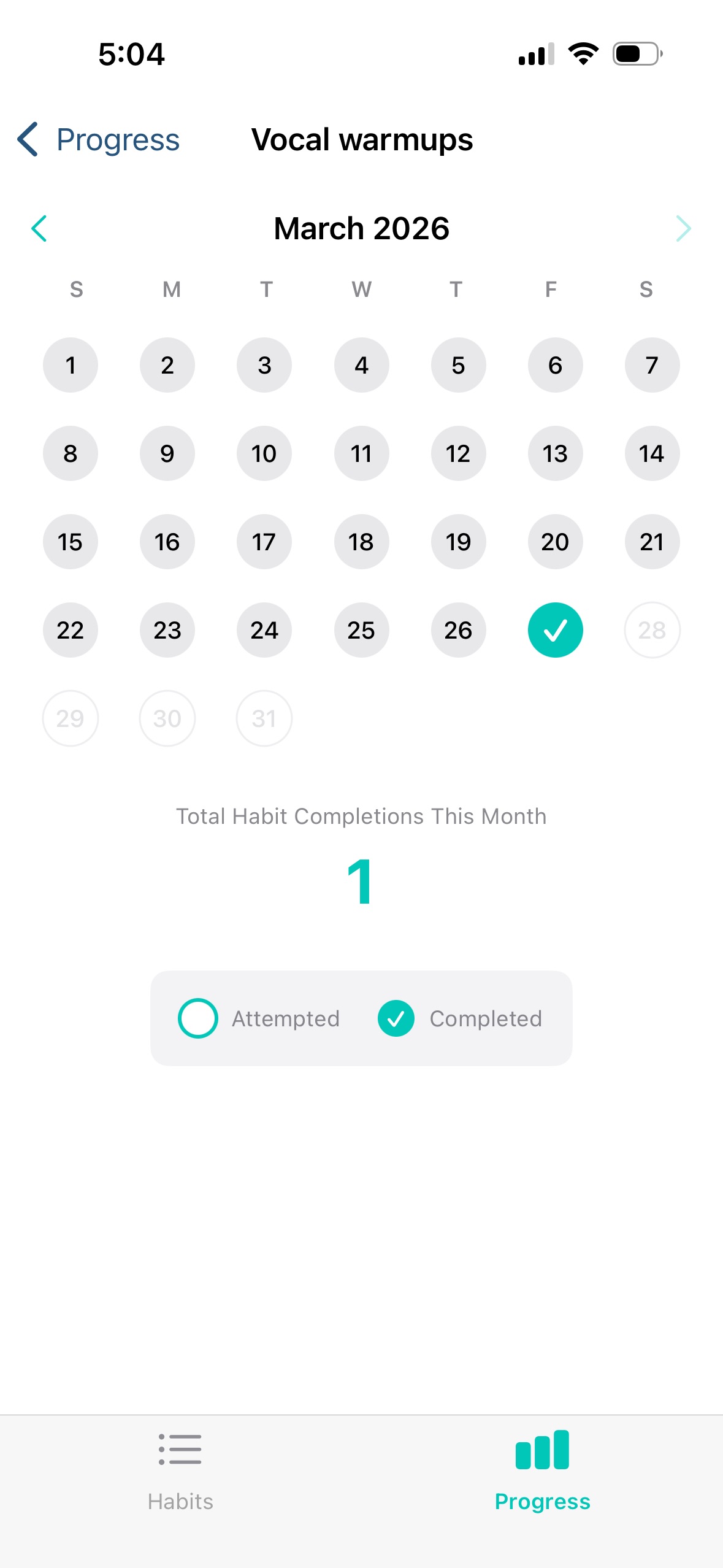
Part of the core philosophy is celebrating attempts, not completions. If a user completes even one of the three micro-steps, that counts as an attempt. The app tracks both "Attempted" and "Completed" on the user's calendar via the Progress section. This directly addressed the research finding that rigid pass/fail tracking punishes the exact people the app is built for.
I modeled two acquisition channels for GTM: Meta ads targeting 13 million people in the demographic, and influencer partnerships with podcasts aligned to the audience (wellness, personal development, women's empowerment). At a $20K/month ad spend with blended allocation across tiers, the model projected $155K/month in gross revenue at $1.87M annually.
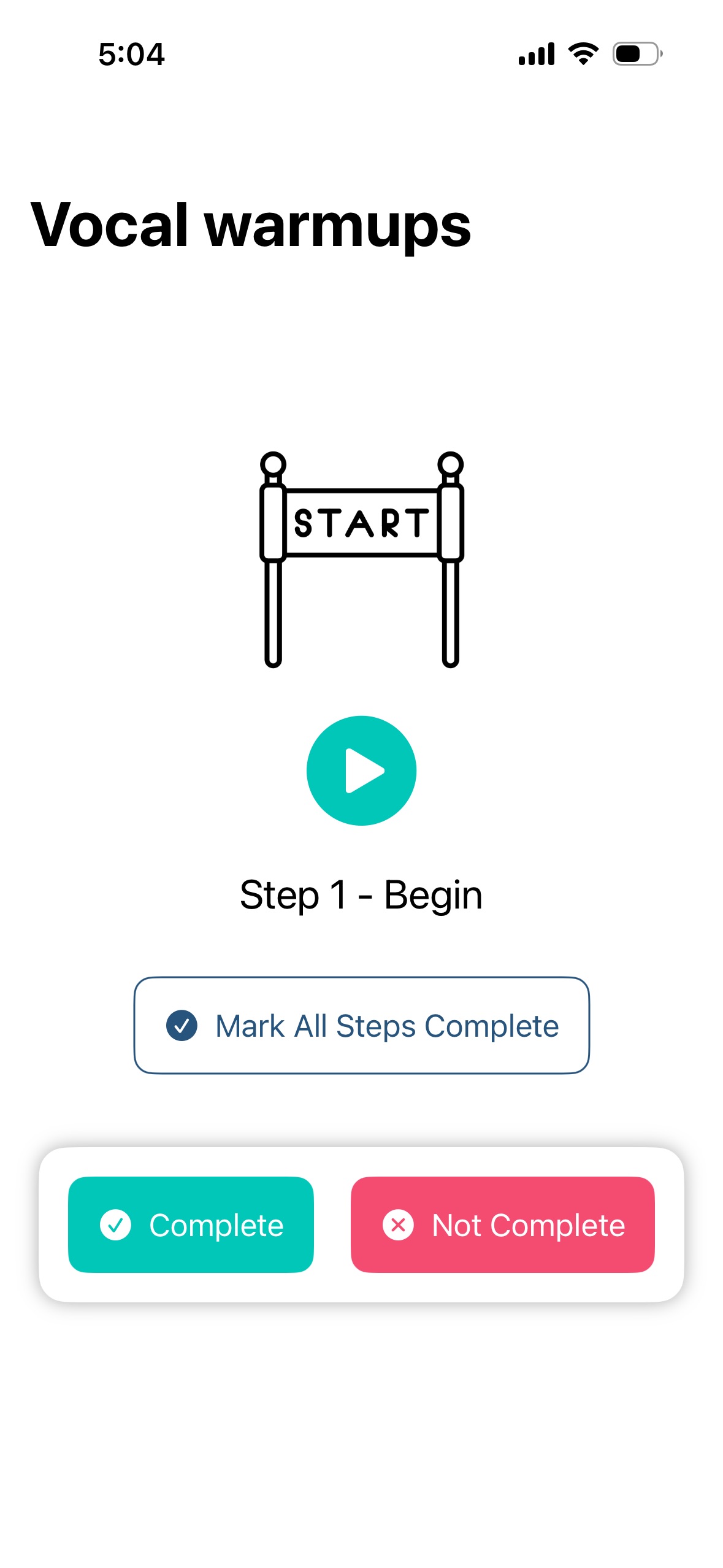
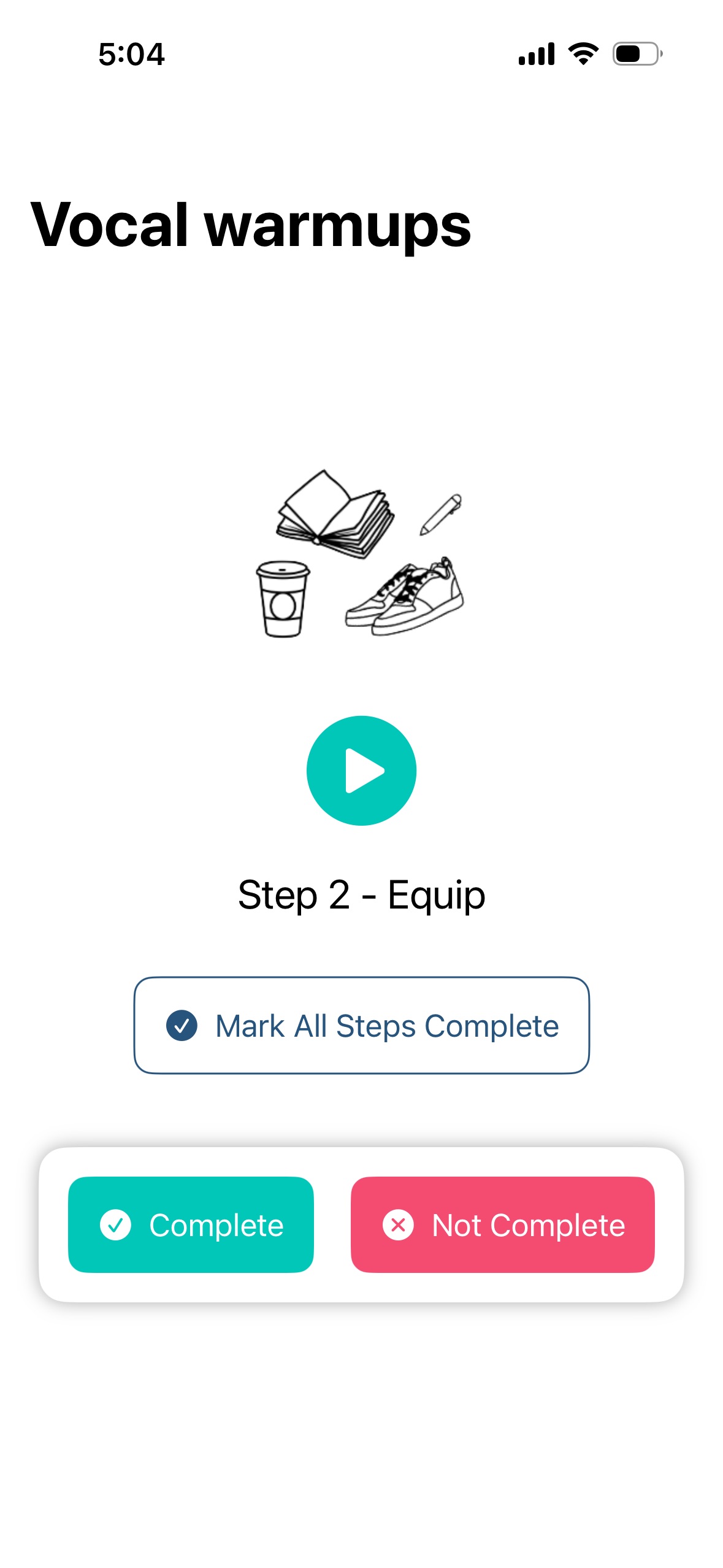
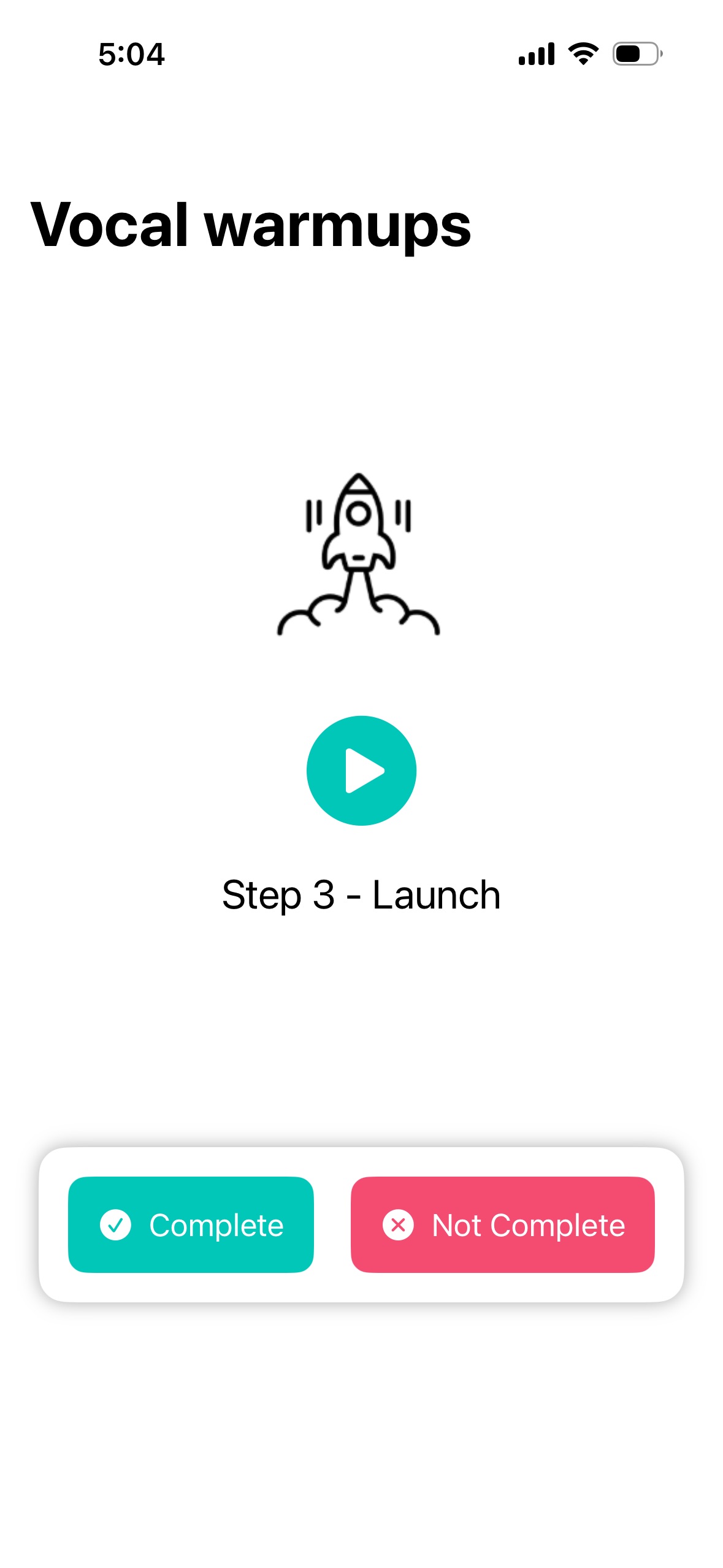
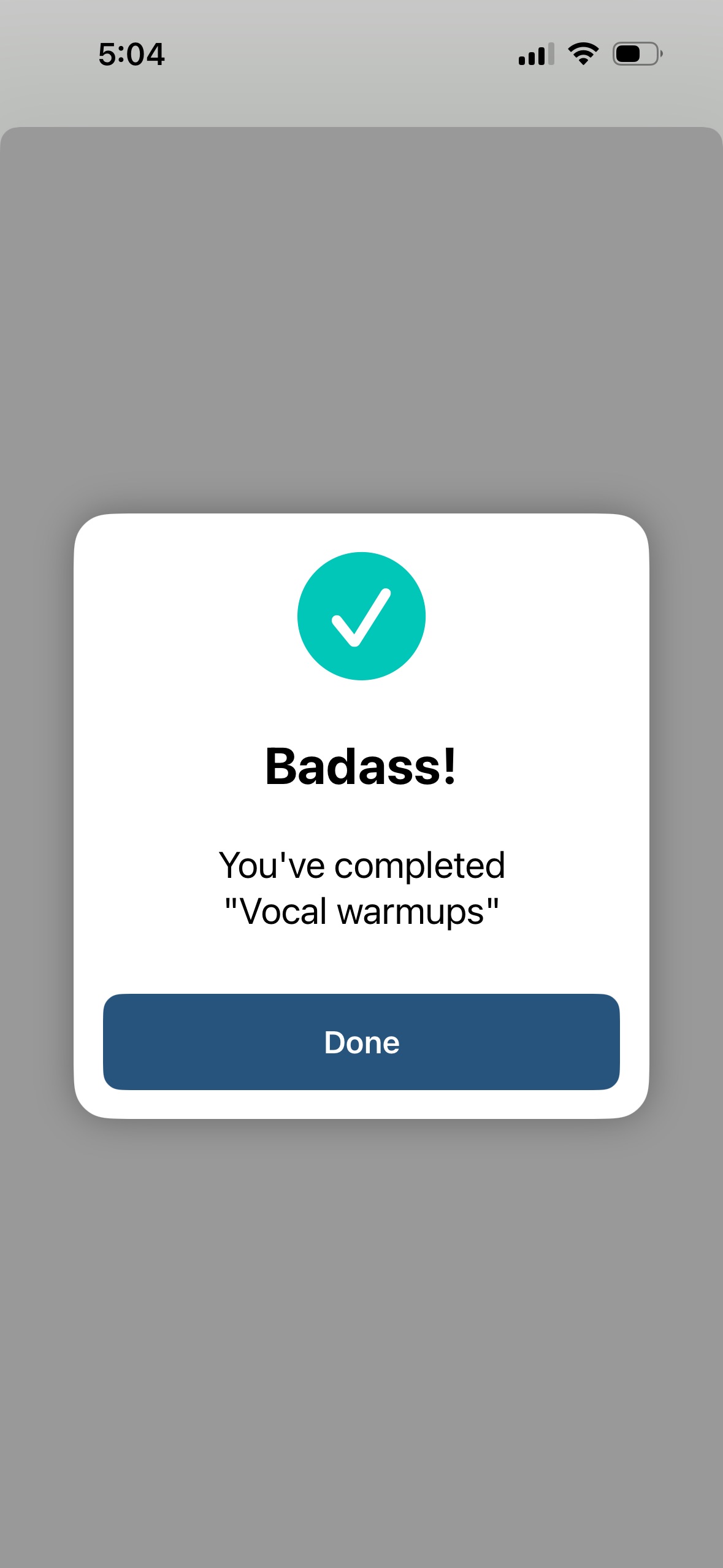
I shipped *bitual to TestFlight beta. The product is functional: users can create habits, record personalized audio prompts for each micro-step, schedule reminders, and track both attempts and completions on a visual calendar.
The beachhead research held up through the build. The 42 qualified participants and 12 interview subjects consistently pointed to the same thing: people who struggle with habits don't need another tracker. They need help in the specific moment where intention meets inertia. That finding shaped every product decision, from the three-step micro-structure to the attempt-first progress model.